
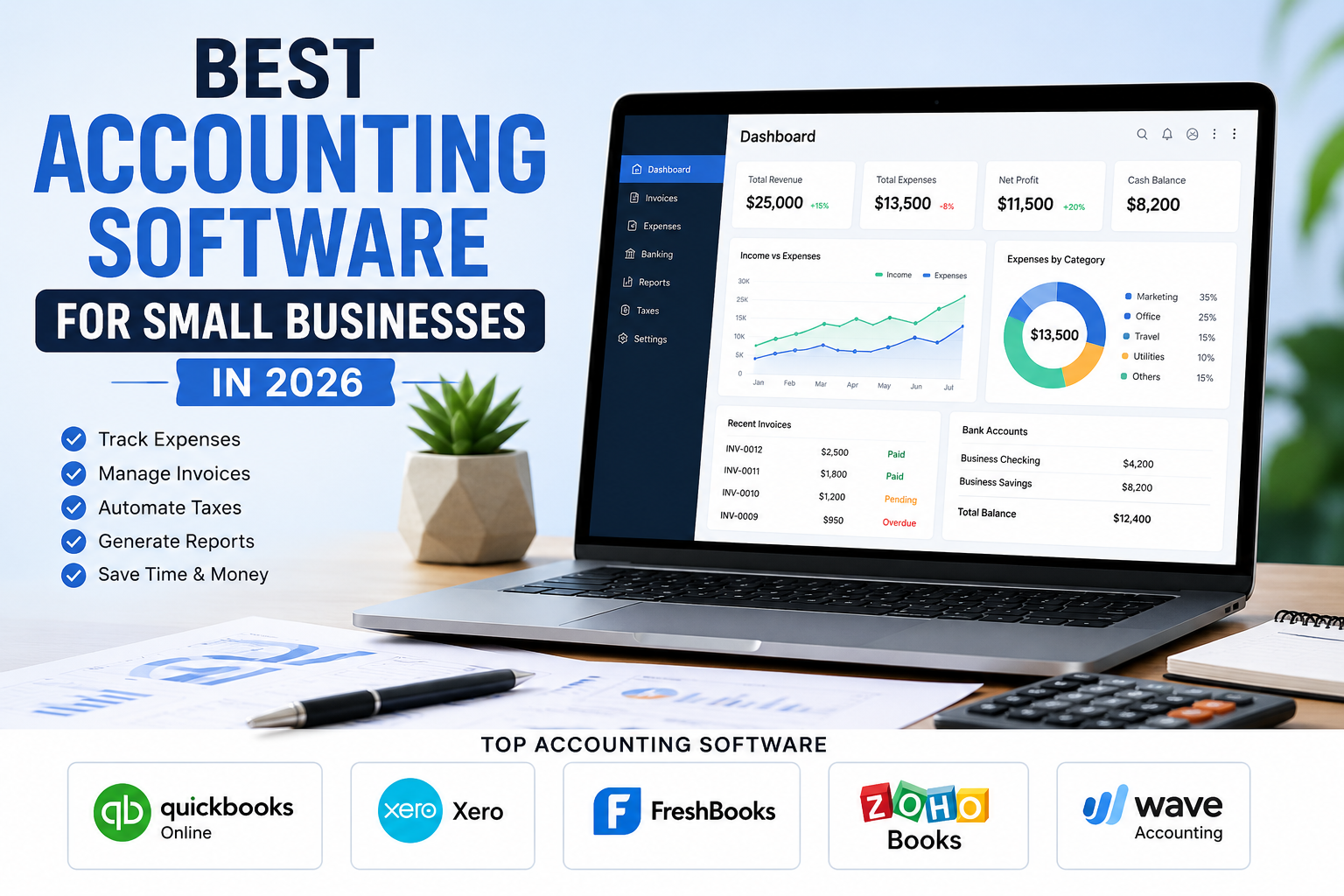
Managing finances is one of the biggest challenges for small business owners. From tracking expenses and invoices to payroll and taxes, accounting can quickly become overwhelming without the right system.
That’s why choosing the best accounting software for small businesses is more important than ever in 2026.
Modern accounting tools help businesses automate bookkeeping, manage cash flow, track profits, and simplify tax preparation. Whether you run a startup, online store, consulting agency, or service business, the right accounting software can save both time and money.
In this guide, we’ll explore the top accounting software for small businesses in 2026, compare features, and help you select the best option based on your business needs.
Why Small Businesses Need Accounting Software
Many small businesses still rely on spreadsheets for financial management.
However, manual accounting creates problems like:
- Data entry errors
- Missed invoices
- Poor cash flow tracking
- Tax filing mistakes
- Time-consuming bookkeeping
Accounting software automates many financial processes and helps business owners stay organized.
Major Benefits of Accounting Software
Using accounting software can help businesses:
- Track expenses automatically
- Create professional invoices
- Manage taxes
- Monitor cash flow
- Generate financial reports
- Reduce bookkeeping mistakes
- Save valuable time
In 2026, financial automation is becoming essential for business growth.
Best Accounting Software for Small Businesses in 2026
Here are the top accounting platforms worth considering.
1. QuickBooks Online
QuickBooks remains one of the most popular accounting software solutions worldwide.
Pros:
- Easy-to-use interface
- Expense tracking
- Payroll integration
- Tax management tools
- Powerful reporting
Cons:
- Monthly subscription costs can increase
Best For:
Small businesses needing a complete accounting solution.
QuickBooks works especially well for freelancers, agencies, online businesses, and local companies.
2. Xero
Xero is known for its cloud-based accounting tools and simple design.
Pros:
- Unlimited users
- Strong invoicing tools
- Bank reconciliation
- Inventory management
Cons:
- Learning curve for beginners
Best For:
Growing businesses needing advanced features.
Xero is especially useful for businesses managing multiple financial processes.
3. FreshBooks
FreshBooks focuses on invoicing and service-based businesses.
Pros:
- Excellent invoicing features
- Time tracking
- Expense management
- User-friendly dashboard
Cons:
- Limited advanced accounting tools
Best For:
Freelancers and service businesses.
FreshBooks works well for agencies, consultants, and solo entrepreneurs.
4. Zoho Books
Zoho Books offers affordable accounting features for smaller companies.
Pros:
- Affordable pricing
- Automation tools
- Tax compliance support
- Multi-currency support
Cons:
- Limited third-party integrations
Best For:
Budget-conscious businesses.
It provides excellent value without expensive subscriptions.
5. Wave Accounting
Wave is one of the best free accounting software platforms.
Pros:
- Free accounting tools
- Invoice management
- Expense tracking
Cons:
- Fewer advanced features
Best For:
Startups and very small businesses.
Wave works well for businesses with tight budgets.
Key Features to Look for in Accounting Software
Choosing the wrong accounting software can create unnecessary problems.
Focus on these important features.
1. Expense Tracking
Good software automatically tracks expenses and organizes spending.
This helps businesses understand where money goes.
2. Invoice Management
Professional invoicing helps improve payments and customer trust.
Look for software with:
- Invoice templates
- Payment reminders
- Automated billing
3. Tax Preparation
Tax season becomes easier with accounting software.
Many tools calculate taxes automatically and organize financial records.
4. Payroll Support
If you have employees, payroll integration matters.
The best software helps manage salaries and tax deductions.
5. Cloud Access
Cloud accounting software allows access from anywhere.
Business owners can monitor finances remotely.
6. Reporting & Analytics
Financial reports help businesses understand:
- Revenue growth
- Profit margins
- Expenses
- Cash flow trends
Data-driven decisions improve business performance.
How to Choose the Best Accounting Software
Not every platform works for every business.
Consider these factors before deciding.
Business Size
Some accounting platforms are designed for freelancers, while others support larger companies.
Choose software that fits your growth goals.
Budget
Free tools work for some startups, but premium platforms often provide stronger automation.
Always compare cost versus value.
Industry Type
Different industries need different features.
For example:
- Retail businesses need inventory tracking
- Service companies need invoicing tools
- Agencies need expense management
Ease of Use
Complicated software wastes time.
Choose tools with a clean interface and easy setup.
Common Accounting Mistakes Small Businesses Make
Avoid these common financial mistakes.
Mixing Personal and Business Finances
Always separate personal and business expenses.
This simplifies taxes and bookkeeping.
Ignoring Cash Flow
Revenue alone doesn’t guarantee profit.
Monitor cash flow regularly.
Delaying Bookkeeping
Waiting too long causes financial confusion.
Update records consistently.
Choosing Cheap Software Only
Low-cost software may lack important features.
Focus on long-term business needs.
Accounting Software Trends in 2026
Financial technology continues evolving.
AI Accounting Automation
Artificial intelligence now helps automate:
- Expense categorization
- Invoice matching
- Financial forecasting
Better Cloud Solutions
Cloud accounting platforms continue improving accessibility and security.
Real-Time Financial Insights
Businesses now receive live financial data instead of waiting for monthly reports.
Mobile Accounting
Business owners increasingly manage finances from mobile devices.
Final Thoughts
Choosing the best accounting software for small businesses depends on your budget, company size, and business goals.
If you want a complete accounting solution, QuickBooks Online remains a strong option.
For cloud-based flexibility, Xero works well.
If affordability matters, Zoho Books and Wave Accounting provide great value.
The right accounting software helps businesses stay organized, reduce errors, save time, and improve financial decision-making.
Investing in the right system in 2026 can support long-term business growth.
FAQs
What is the best accounting software for small businesses?
QuickBooks, Xero, FreshBooks, Zoho Books, and Wave are among the top choices.
Is free accounting software good for small businesses?
Yes. Free software like Wave works well for startups with simple accounting needs.
Which accounting software is easiest to use?
FreshBooks and QuickBooks are beginner-friendly options.
Do small businesses really need accounting software?
Yes. It helps manage finances, taxes, expenses, and cash flow efficiently.
Can accounting software help with taxes?
Yes. Most accounting tools organize tax records and simplify tax preparation.
