Starting a business can be exciting, but funding remains one of the biggest challenges for entrepreneurs. Whether you’re launching an online company, retail store, finance agency, or tech startup, having access to capital can determine your success.
Many new business owners struggle because traditional banks often hesitate to lend money to startups with limited financial history. Fortunately, there are now several business loan options for startups designed to help entrepreneurs access the funding they need.
In this guide, we’ll explore the best startup business loans in 2026, compare funding options, and explain how to choose the right financing for your business.
Why Startups Need Business Loans
Most startups require money to cover:
- Business equipment
- Marketing and advertising
- Office setup
- Employee salaries
- Inventory purchases
- Software and technology tools
- Daily operating expenses
Without proper funding, business growth becomes difficult.
A startup business loan helps entrepreneurs manage cash flow and scale operations faster.
What Is a Startup Business Loan?
A startup business loan is financing specifically designed for new businesses that may not yet have established revenue or long-term credit history.
Unlike traditional loans, startup financing often focuses on:
- Business potential
- Personal credit score
- Business plan quality
- Revenue projections
Many lenders now offer flexible options for entrepreneurs.
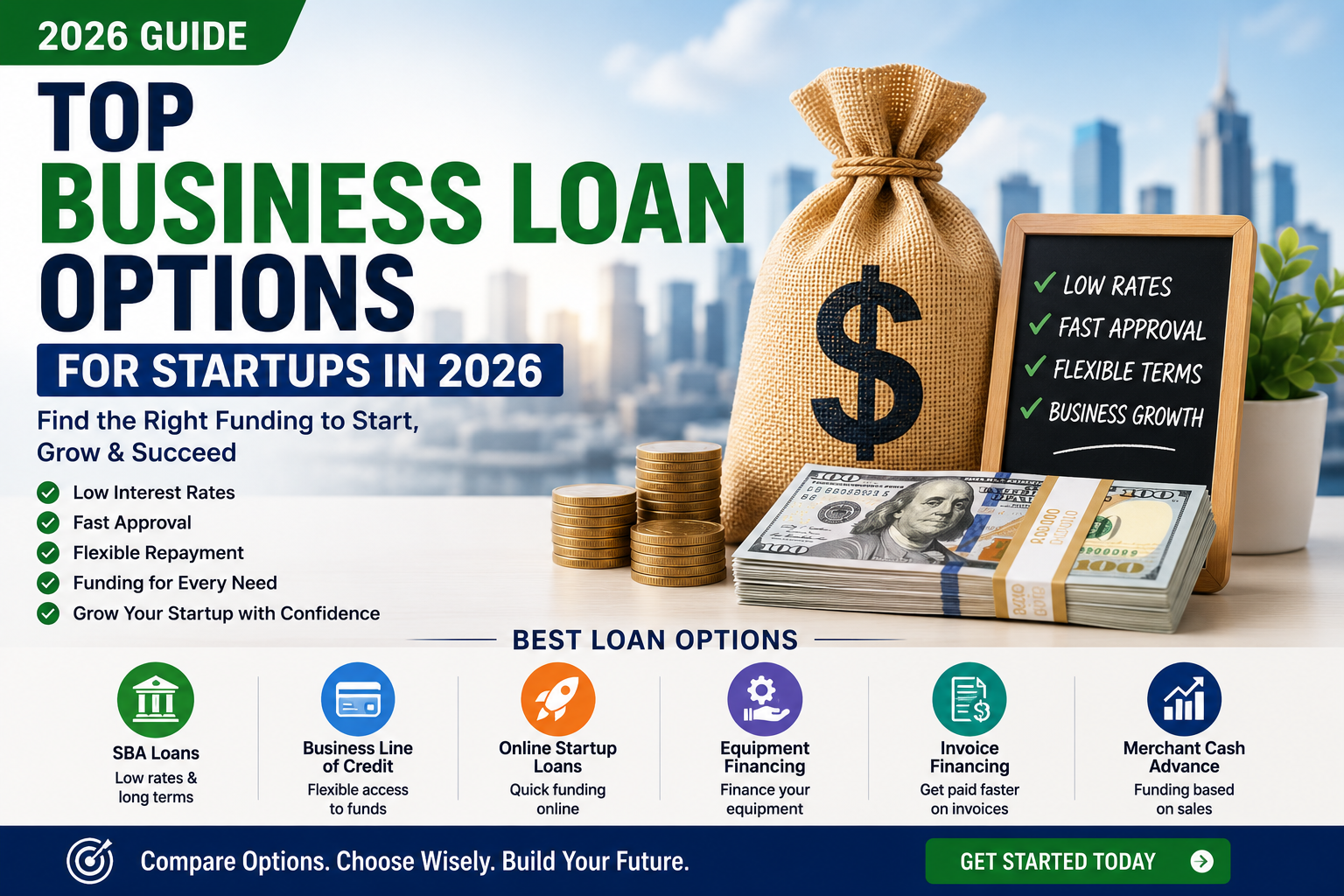
Best Business Loan Options for Startups in 2026
1. SBA Startup Loans
Small business administration-backed loans remain among the most trusted financing options.
Pros:
- Lower interest rates
- Longer repayment terms
- High borrowing limits
Cons:
- Strict approval process
- Requires documentation
Best For:
Businesses seeking affordable long-term financing.
SBA loans work best for startups with strong business plans and stable financial projections.
2. Business Line of Credit
A business line of credit gives startups flexible access to funds.
Instead of receiving one lump sum, business owners can borrow as needed.
Pros:
- Flexible borrowing
- Pay interest only on used funds
- Good for cash flow management
Cons:
- Variable interest rates
Best For:
Businesses needing ongoing working capital.
Many startups prefer this option because it provides financial flexibility.
3. Online Startup Loans
Online lenders are becoming increasingly popular.
These lenders offer fast approvals and fewer requirements than traditional banks.
Pros:
- Fast approval process
- Easy online applications
- Flexible eligibility
Cons:
- Higher interest rates
Best For:
Businesses needing fast funding.
Some online lenders approve loans within 24–72 hours.
4. Equipment Financing
If your startup needs equipment, machinery, or business tools, equipment financing can help.
The equipment itself often acts as collateral.
Pros:
- Easier approval
- Helps preserve cash flow
Cons:
- Limited to equipment purchases
Best For:
Retail, construction, healthcare, and manufacturing startups.
5. Business Credit Cards
Many entrepreneurs underestimate business credit cards.
A strong business credit card can help cover:
- Advertising expenses
- Office supplies
- Software subscriptions
- Travel expenses
Pros:
- Quick access to funding
- Rewards and cashback
- Builds business credit
Cons:
- High interest if unpaid
Best For:
Short-term business expenses.
6. Invoice Financing
Invoice financing helps businesses access cash based on unpaid invoices.
Instead of waiting for customer payments, startups receive money upfront.
Pros:
- Improves cash flow
- Fast approval
Cons:
- Service fees apply
Best For:
B2B startups dealing with delayed payments.
7. Merchant Cash Advances
A merchant cash advance provides funding based on future sales.
Repayment occurs automatically through card transactions.
Pros:
- Fast funding
- Minimal paperwork
Cons:
- Expensive repayment costs
Best For:
Businesses with consistent sales volume.
How to Qualify for a Startup Business Loan
Lenders evaluate several factors before approval.
1. Personal Credit Score
Since startups often lack business credit history, personal credit becomes important.
Higher scores usually improve approval chances.
2. Business Plan
A strong business plan increases lender confidence.
Your plan should include:
- Revenue projections
- Business model
- Marketing strategy
- Financial goals
3. Revenue Potential
Lenders want proof that your business can repay debt.
Even projected revenue may help.
4. Industry Type
Some industries receive easier approvals.
Technology, healthcare, finance, and professional services often perform better.
Best Startup Loan Providers in 2026
Popular lenders include:
- Traditional banks
- Online business lenders
- Credit unions
- Fintech lending companies
Always compare:
- Interest rates
- Fees
- Repayment terms
- Approval speed
Choosing the wrong loan can become expensive.
Common Startup Loan Mistakes to Avoid
Borrowing Too Much
Taking more money than needed increases debt risk.
Only borrow what supports business growth.
Ignoring Loan Terms
Many business owners focus only on approval.
Always review:
- Interest rates
- Hidden fees
- Repayment schedules
Applying Everywhere
Too many applications can hurt credit scores.
Research lenders first.
Not Building Business Credit
Strong business credit helps secure better financing later.
How to Improve Loan Approval Chances
Here are ways to improve approval:
- Increase personal credit score
- Create a detailed business plan
- Open a business bank account
- Reduce existing debt
- Prepare financial documents
Preparation matters.
Business Loan Trends in 2026
Startup financing is evolving rapidly.
AI Lending Decisions
Many lenders now use artificial intelligence to evaluate businesses faster.
Faster Funding
Online lenders continue reducing approval time.
Flexible Financing
Startups now have more customized funding options.
Fintech Growth
Financial technology companies are expanding startup financing opportunities.
Final Thoughts
Finding the best business loan for startups depends on your goals, business type, and financial needs.
If you want affordable long-term funding, SBA loans are strong.
For flexibility, a business line of credit works well.
If speed matters, online lenders may be the better option.
Before choosing any financing, compare rates, repayment terms, and long-term costs carefully.
The right funding can help startups scale faster and achieve long-term success in 2026.
FAQs
What is the easiest business loan to get for startups?
Online startup loans and business credit cards are usually easier to qualify for.
Can I get a startup business loan with no revenue?
Yes. Some lenders consider personal credit score and business plans.
What credit score is needed for a startup loan?
Many lenders prefer scores above 650, but requirements vary.
Are SBA loans good for startups?
Yes. SBA loans offer lower rates and longer repayment terms.
What is the fastest startup funding option?
Online lenders and merchant cash advances usually provide the fastest approvals.
