
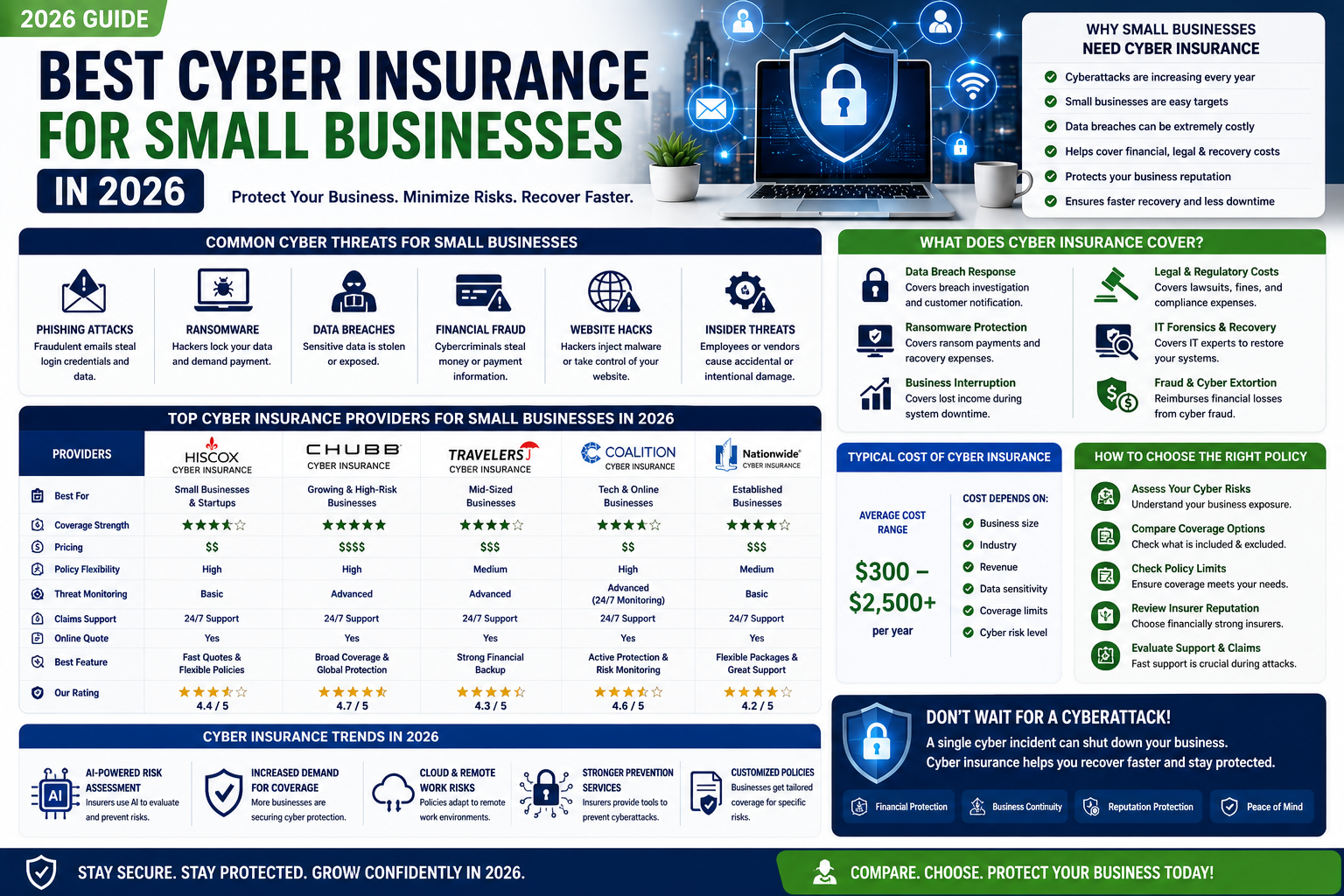
Cyber threats are growing faster than ever.
Small businesses are increasingly targeted by:
- Data breaches
- Ransomware attacks
- Phishing scams
- Customer information leaks
- Financial fraud
- Website hacks
Unfortunately, many business owners assume cyberattacks only affect large companies.
That’s no longer true.
In 2026, cybercrime continues affecting businesses of all sizes, making cyber insurance for small business more important than ever.
The best cyber insurance helps companies recover financially after cyber incidents by covering damages, legal costs, lost revenue, and recovery expenses.
In this guide, we’ll compare the top cyber insurance providers for small businesses in 2026, benefits, coverage options, and how to choose the right policy.
What Is Cyber Insurance?
Cyber insurance protects businesses against financial losses caused by digital attacks and cybersecurity incidents.
Coverage often includes:
- Data breach recovery
- Ransomware payments
- Legal expenses
- Customer notification costs
- Business interruption losses
- Fraud recovery
- IT forensic investigations
Instead of paying huge recovery costs alone, insurance helps businesses recover faster.
Why Small Businesses Need Cyber Insurance
Many cybercriminals target smaller companies because security systems are often weaker.
Cyber insurance helps businesses:
1. Recover From Data Breaches
Protect customer and business information.
2. Reduce Financial Damage
Cyberattacks can cost thousands—or even millions.
3. Cover Legal Expenses
Lawsuits after breaches can become expensive.
4. Protect Business Operations
Insurance helps reduce downtime.
5. Improve Customer Trust
Customers feel safer with protected businesses.
Best Cyber Insurance Providers for Small Businesses in 2026
1. Hiscox Cyber Insurance
Popular among small businesses.
Pros:
- Flexible cyber protection
- Data breach support
- Fast online quotes
Cons:
- Coverage varies by industry
Best For:
Small businesses and startups.
2. Chubb Cyber Insurance
Strong enterprise-grade protection.
Pros:
- Excellent cybersecurity support
- Broad policy coverage
Cons:
- Higher pricing
Best For:
Growing companies.
3. Travelers Cyber Insurance
Trusted insurance provider.
Pros:
- Strong financial protection
- Risk management resources
Cons:
- Policy pricing varies
Best For:
Mid-sized businesses.
4. Coalition Cyber Insurance
Cyber-focused provider.
Pros:
- Threat monitoring tools
- Cybersecurity prevention support
Cons:
- Limited regional availability
Best For:
Tech and online businesses.
5. Nationwide Cyber Insurance
Broad business coverage.
Pros:
- Flexible business policies
- Good customer support
Cons:
- Coverage depends on business type
Best For:
Established companies.
Types of Cyber Insurance Coverage
Data Breach Coverage
Protects customer data recovery costs.
Ransomware Protection
Helps recover after attacks.
Business Interruption Insurance
Covers revenue losses during downtime.
Legal & Compliance Costs
Helps manage lawsuits and regulatory penalties.
Fraud Protection
Supports recovery from cyber fraud.
Features to Look for in Cyber Insurance
Strong Coverage Limits
Higher protection reduces risk.
Fast Claims Process
Quick support matters after attacks.
Cybersecurity Support
Some insurers offer prevention tools.
Industry-Specific Protection
Choose policies matching your business risks.
Affordable Pricing
Compare cost versus protection.
How to Choose the Best Cyber Insurance
Ask yourself:
Does Your Business Store Customer Data?
If yes, cyber insurance matters more.
Are You Running Online Operations?
E-commerce businesses face higher risk.
Do You Accept Digital Payments?
Financial data increases exposure.
What Coverage Limits Do You Need?
Higher-risk businesses may need larger policies.
Cyber Insurance Trends in 2026
AI Cyber Threat Detection
Insurers increasingly use AI risk analysis.
Higher Demand for Cyber Protection
Business cyber spending continues growing.
Better Prevention Services
Insurance providers now offer security tools.
Customized Cyber Policies
Businesses receive more personalized protection.
Common Mistakes to Avoid
Choosing Cheapest Coverage Only
Low-cost plans may exclude important risks.
Ignoring Small Cyber Risks
Small businesses are major targets.
Underestimating Recovery Costs
Cyberattacks can become expensive.
Delaying Coverage
Waiting increases risk exposure.
Final Thoughts
The best cyber insurance for small business depends on your business size, industry, and cybersecurity risks.
For affordability, Hiscox works well.
For advanced protection, Chubb and Coalition provide strong options.
If your business stores customer data or processes online payments, cyber insurance is becoming essential in 2026.
Protecting your business today can prevent major financial damage tomorrow.
FAQs
What is the best cyber insurance for small businesses?
Hiscox, Chubb, Travelers, Coalition, and Nationwide are popular options.
Is cyber insurance worth it?
Yes. Cyberattacks can create major financial losses.
Do small businesses really need cyber insurance?
Yes. Small businesses are common cyberattack targets.
What does cyber insurance cover?
Data breaches, ransomware, legal costs, fraud, and downtime.
How much does cyber insurance cost?
Pricing depends on business size, industry, and risk level.
